Tutorial level flow

During the brainstorming phase for the project, it was decided that a non-verbal approach will be taken when considering both the way the story would be delivered as well as how the player will be taught how to play the game.

This design approach was taken because it was deemed less expensive than having voice over or significant amounts of text. The whole tutorial would be conveyed trough the use of icons.

Our UX designer set to work on the icons and where to better arrange them on the game screen to make them easy for the player to see and understand. Our technical team started working on an implementation solution.

Finally, I was left with creating a level flow chart that would define the core of the tutorial level and help communicate the vision for this non-verbal tutorial.

The building blocks for this simple diagram are as follows:

“LEVEL/LOCATION” block – serves to inform about the location of the player and eventual location changes

“PLAYER RESPONSE” block –  what the player does, objective previously communicated to the player

“LOCK” block – also known as hard gate, restricts forward progress until a certain criteria has been met

“KEY” block – status changes to the world or the player that will open a “lock”, permit advance

By using these building blocks the following level flow diagram emerged for our non-verbal tutorial level:

LevelFlowTUTORIAL

– Marius Anton – Design lead

Age rating the game

“Age ratings systems are used to ensure that entertainment content, such as films, videos, DVDs, and computer games, are clearly labelled by age according to the content they contain. Age ratings provide guidance to consumers (particularly parents) to help them decide whether or not to buy a particular product.” (Pegi.info, 2015)

In order to localise our game, research had to be done regarding age rating in the territories we targeted for release. And, if necessary, change certain aspects of the game, to better align it to a specific rating in a region.

Rating is always taken into account when designing a game because the developer’s aim is to be able to market to as wide of an audience as possible and receiving certain ratings, such as the “AO”( adults only ) rating in the US or the USK 18+ in Germany, may result in low to non-existent sales in that particular region.

As an indie developer this is even more important, because of the tight budgets when it comes to production and marketing. Every sale counts when you’re a small studio, losing sales because of the age rating can really hurt your game and your studio.

pegi_ratings_system

Our game is an isometric zombie survival/shooter with very stylised graphics. The player takes control of a human character and is tasked with shooting shambling zombies  that are attacking him. When aiming for a rating I took several factors into account:

  • the game contains violence ( the player shoots the zombies, the player gets attacked/hurt by the zombies )
  • the depiction of death and dead people ( zombies, player when he gets killed )
  • blood and gore (when the player shoots the zombies stylised blood spray is released as well as when the player is hurt )

Taking the previous factors into account I reached the conclusion that the ratings our team should be aiming for are as follows:

pegi_16


PEGI 16 for Europe

 
esrb_teen_logo_by_darkslayer00-d5ry4aa T for Teen in the US

500px-usk16_neu2-svg USK 16 in Germany

Aiming for these ratings would allow us to keep the game vision intact. Changes had to be made to the German version of the game because the rating body of the country is more strict. In order to meet the USK 16 requirements all the depictions of blood in the game had to be changed and as a result the colour of the blood in the German version is green.

Bibliography:

Esrb.org, (2015). ESRB Ratings. [online] Available at: http://www.esrb.org/ [Accessed 10 Nov. 2015].

Pegi.info, (2015). PEGI Pan European Game Information – Welcome. [online] Available at: http://www.pegi.info/en/index/id/952 [Accessed 10 Nov. 2015].

Usk.de, (2015). USK: Herzlich willkommen bei der USK. [online] Available at: http://www.usk.de/ [Accessed 9 Nov. 2015].

Wikipedia, (2015). Unterhaltungssoftware Selbstkontrolle. [online] Available at: https://en.wikipedia.org/wiki/Unterhaltungssoftware_Selbstkontrolle [Accessed 9 Nov. 2015].

– Marius Anton – Design Lead

The “little” details

While going trough the game again, the team found another detail we initially missed, but could affect our localisation work. That little detail was represented by the small “coins” the enemies drop after being dispatched by the player. They had a “$” sign on them, an innocent item it may seem, but at the end of a stage the player gets a score counter based on the amount of coins he collected.

The issue that arose is that the player might get confused by the “$” sign on the coins, especially since there is no internal economy in the game and the purpose of the coins and the final score is to give the player feedback on how well he played the level and incentivise level replays.

An internal debate started on whether we should localise the coins to mirror the currency of each locale or have something more generic that could apply to all regions.

The final decision was made to create a generic looking coin because their singular function in the game is to track the score.

CurrencyIcon

Market tailoring trough localisation

Our team decided to tackle the localisation project from an indie game developer perspective, this means a lack of funds and a need to stand out in a market flooded by indie titles. From a design perspective I thought it would be an interesting challenge to see if we could use the localisation process to better tailor our game to the market while keeping costs in mind as well.

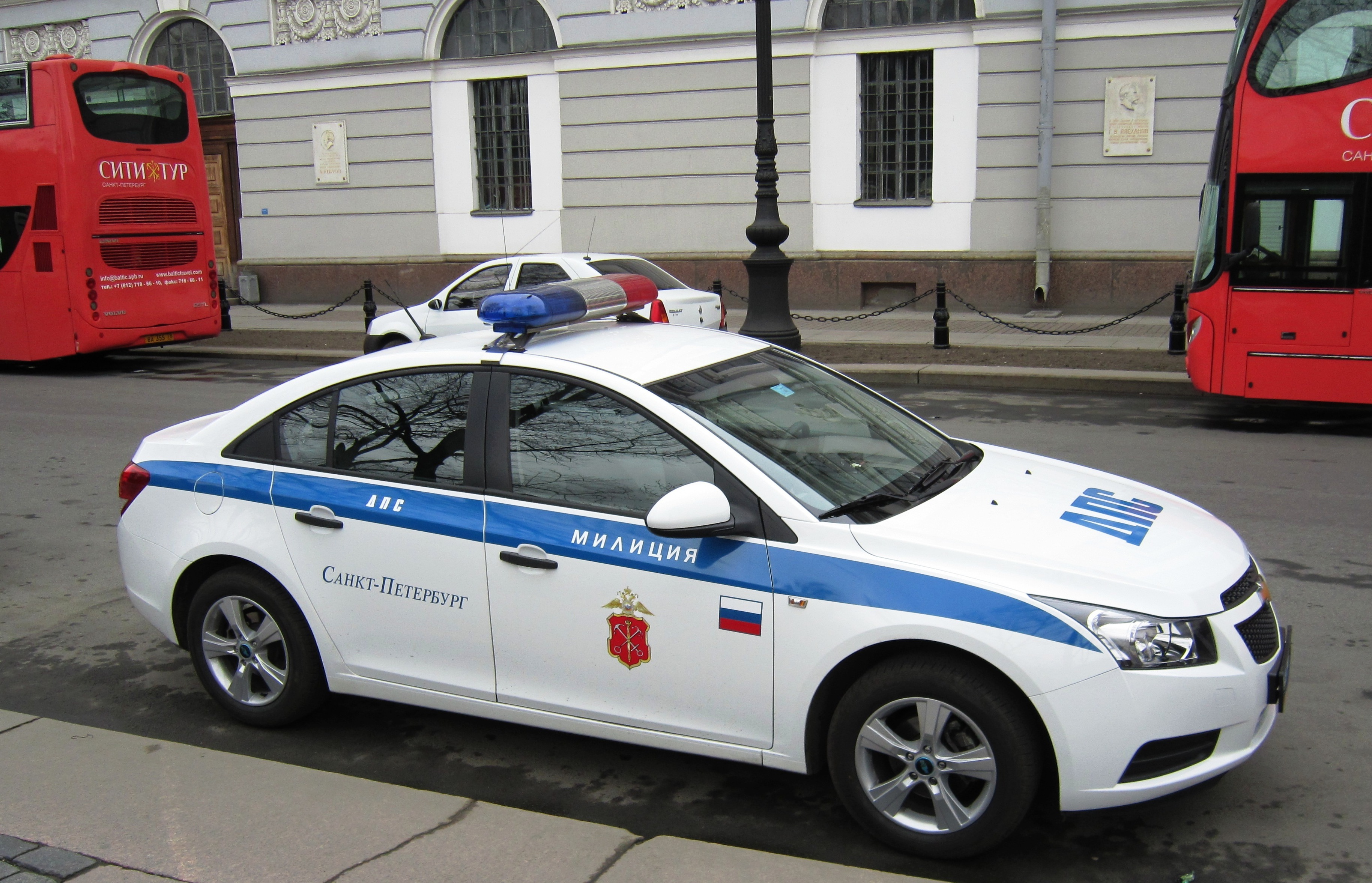
The main protagonist of the game is a police officer who, after crashing his patrol car, finds himself surrounded by zombies. The player assumes the role of the police officer fighting his way trough the zombie hordes. To make our game stand out a bit the decision was taken to have the main character’s uniform and the patrol car reflect the region the player has selected before starting the game.

Research was done on the way police officers dress and the way their patrol cars look in the regions we are localising for.

After the research concluded, all the findings were handed over to our content creator.

Bibliography:

Commons.wikimedia.org, (2015). Police cars by country – Wikimedia Commons. [online] Available at: https://commons.wikimedia.org/wiki/Police_cars_by_country [Accessed 20 Nov. 2015].

Upload.wikimedia.org, (2015). [online] Available at: https://upload.wikimedia.org/wikipedia/commons/b/b7/Russia_police_car_08.JPG [Accessed 20 Nov. 2015].

Hopes&Fears, (2015). Uniforms of Fear: cop fashion from around the world. [online] Available at: http://www.hopesandfears.com/hopes/city/life/214093-police-fashion [Accessed 20 Nov. 2015].

Designdenhaag.eu, (2015). Police uniforms | Design Den Haag. [online] Available at: http://www.designdenhaag.eu/police-uniforms [Accessed 18 Nov. 2015].

Volent, R. and Volent, R. (2015). 20 Police Uniforms from Around the World – Uniform Stories. [online] Uniformstories.com. Available at: http://uniformstories.com/articles/lists-category/20-police-uniforms-from-around-the-world [Accessed 19 Nov. 2015].

– Marius Anton – Design Lead


Localisation changes in modern games

In my last post I focused on how a localisation error led to a fairly mediocre game becoming rather famous in the 80’s. Now I’m going to focus on more modern games and try to show that even today, in an age of globalisation and the breaking down of cultural barriers, there are still quite stark differences between Japanese and Western versions of some games.

The first game I’ll focus on is Dead or Alive Xtreme 3, a beach volleyball spin-off from the fighting game series which sees scantily clad women participate in all sort of simplistic mini-games. The game, due out on PlayStation 4 and Vita in Japan in February 2016, will not come out in Europe or North America. Publisher Koei Tecmo has opted against bringing the game out on these shores because of “issues” regarding the representation of women in video games. This just underlines how the representation of women in games has changed over the years and how a series that was ported to Europe and North America before will not be ported now as the gaming landscape has changed over the years.

The second game is another Japanese game called Xenoblade Chronicles X, which comes out on the Nintendo Wii U this month and which also received a makeover before release in Europe and North America. One of the female characters in the game, who is supposed to be younger than the others, can no longer wear the same revealing outfits as the rest of the female cast. Also when creating female characters the Japanese version has a slider that adjusts the bust size of said character but on the non-Japanese version this slider is no longer available.

A video showing the changes:

What we can conclude from this short study is that the introduction of any female characters in one’s game must be thoroughly thought out as the way women are portrayed in games has changed a lot and the “established” ways of doing it are no longer acceptable.

– Marius Anton – Design Lead


Famous localisation mistake

Localisation mistakes are nothing new but few have become as popular as the localisation mistake made when the Zero Wing video game from 1991 was translated into English. At the very beginning of the game, in the opening cutscene one character’s dialog reads as follows: “All your base are belong to us“. This short phrase will become very popular many years later. This was not an isolated incident when it came to this game though, the whole game was poorly translated from the original Japanese into English. A quick example of a line of text from the game, with the accompanying poor translation and correct translation:

Original: 機関士:何者かによって、爆発物が仕掛けられたようです。

Translation: Mechanic: Somebody set up us the bomb.

Correct translation: Engineer: Somebody has planted a bomb.

(Wikipedia, 2015)

The phrase uttered at the beginning of the game has appeared in numerous articles, books, comics, clothing, movies, radio shows, songs, television shows, video games, webcomics, and websites. It is an interesting case of a relatively mediocre game that wasn’t received that well critically when launched, to become an internet phenomenon at a much later date, due to its poor localisation. The video game industry has come a long way since then and the localisation efforts of game companies have improved exponentially. Localisation mishaps still occur though and I will cover more of them in future posts. But until then, remember that: “All your base are belong to us“.

– Marius Anton

Bibliography: Wikipedia, (2015). All your base are belong to us. [online] Available at: https://en.wikipedia.org/wiki/All_your_base_are_belong_to_us [Accessed 15 Nov. 2015].